

Show 57+ sites like labeurette:
labeurette
https://www.labeurette.com/
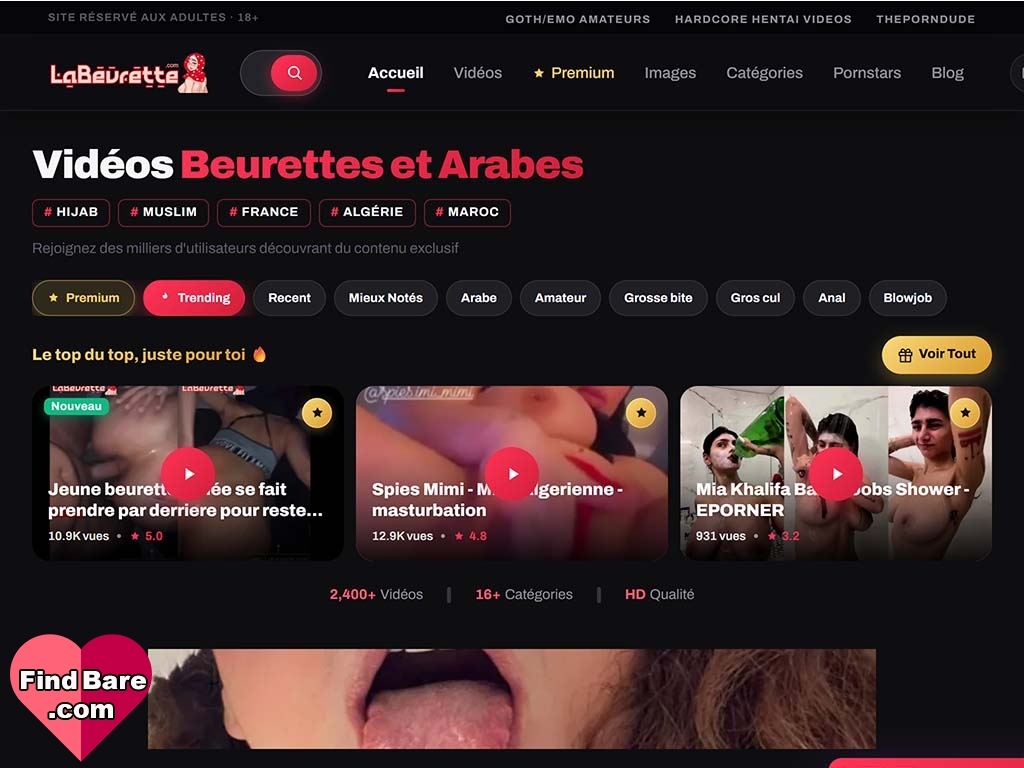
LaBeurette.com Visitor Guide: Privacy, Access and Safe Browsing Explained
Visiting an unfamiliar adult website should involve more than opening the homepage and selecting the first available video. Before creating an account, accepting cookies or entering payment information, a visitor should understand what the website appears to offer, what data it may collect and which warning signs deserve attention.
LaBeurette.com is associated with French-language adult entertainment and a narrowly defined content niche. That specialized positioning may help the site attract a particular audience, but it also makes privacy, age restrictions, advertising quality and cultural awareness important parts of any fair assessment.
This guide does not reproduce or describe explicit material. Instead, it explains how an adult visitor can evaluate LaBeurette.com responsibly, reduce unnecessary digital exposure and make an informed decision before interacting with its content or services.
Why Research LaBeurette.com Before Visiting?
Adult websites can differ considerably in quality and transparency.
One platform may provide clear navigation, visible legal information and understandable account controls. Another may rely on confusing advertisements, repeated redirects or poorly explained billing offers. A domain name alone does not reveal which experience a visitor will receive.
Researching a website beforehand can help answer several practical questions:
-
Is the domain intended exclusively for adults?
-
Does the website explain who operates it?
-
Are privacy and cookie policies available?
-
Does browsing require registration?
-
Are advertisements clearly separated from site controls?
-
Is payment recurring or limited to a one-time purchase?
-
Can an account and its associated data be deleted?
-
Is there a process for reporting unauthorized content?
The answers may change as the platform updates its design or policies. A recent visitor should therefore verify current information instead of relying entirely on an old review.
What Can Be Said About the Website?
LaBeurette.com should be treated as an adults-only website connected to a French-language audience and a specialized adult-content category.
The exact selection of pages, videos, account features and commercial options may change. Some sections may also behave differently depending on the visitor’s country, device, browser settings or legal jurisdiction.
During editorial research, direct automated access to the homepage was restricted. For that reason, this guide does not make unsupported claims about the current size of its library, membership prices, download tools or performer database.
That limitation is important. A reliable review should distinguish between information that can be observed and information that would otherwise be guessed.
Quick Website Assessment
| Evaluation area | What a visitor should check |
|---|---|
| Intended audience | The site should be accessed only by adults |
| Language | Navigation and branding may primarily target French-speaking users |
| Account access | Confirm whether registration is optional or required |
| Payment | Read the complete billing and renewal conditions |
| Privacy | Find the privacy policy before submitting personal data |
| Cookies | Reject optional trackers when a suitable control is available |
| Advertising | Separate genuine navigation from promotional buttons |
| Permissions | Avoid unnecessary notification, camera or location access |
| Content reporting | Look for copyright, consent and removal procedures |
| Device safety | Use an updated browser and operating system |
This table is not a verdict on the website. It is a framework visitors can use to form their own evidence-based conclusion.
A Four-Layer Trust Test for Adult Websites
A useful way to evaluate LaBeurette.com is to examine four separate layers: identity, access, data handling and commercial behavior.
Layer One: Website Identity
Start by confirming that the browser is displaying the intended domain.
Lookalike domains may use altered spelling, additional words or a different domain extension to imitate an established website. These copies can be designed to collect credentials, distribute unwanted software or lead visitors into deceptive subscriptions.
Check the address carefully before entering information. A secure connection should also be present, and the browser should not display a certificate warning.
HTTPS protects information while it travels between the browser and the server. It does not, by itself, prove that a website is ethical or reliable. It is only one basic requirement.
A transparent website should make important information reasonably easy to locate, including:
-
Terms of use;
-
Privacy policy;
-
Cookie settings;
-
Contact details;
-
Copyright information;
-
Content-removal procedures; and
-
Age restrictions.
A visitor should become more cautious when these pages are missing, incomplete or written so vaguely that they answer no practical questions.
Layer Two: Access Controls
Adult platforms have a responsibility to prevent access by minors.
A simple “I am over 18” button is an age declaration, but it may not provide meaningful verification. Some jurisdictions now require stronger age-assurance systems for restricted online material.
Age verification can involve privacy-sensitive information. Depending on the method, a visitor may be asked to use an identity document, payment-based confirmation, facial age estimation or a third-party verification service.
Before participating, determine:
-
Who receives the submitted information;
-
Whether the website learns the visitor’s identity;
-
Whether a third-party company performs the check;
-
How long verification information is stored;
-
Whether images or documents are deleted after verification; and
-
Whether the process is clearly explained in a privacy notice.
Adults should not have to disclose more identity data than is necessary to prove an age threshold. Minors, meanwhile, should never attempt to bypass a website’s restrictions.
Layer Three: Personal Data
A visitor can share information without intentionally completing a form.
Websites commonly receive technical details such as browser type, IP address, device characteristics, language settings and page interactions. Cookies and similar technologies may also remember sessions or support advertising analysis.
Browsing an adult website can reveal highly sensitive interests. That makes the distinction between necessary and optional data collection especially important.
A clear privacy policy should explain:
-
Which categories of information are processed;
-
The purpose of processing;
-
The legal basis, where applicable;
-
Which service providers receive information;
-
Whether data is transferred internationally;
-
How long records are retained;
-
How deletion can be requested; and
-
How users can exercise privacy rights.
Visitors should avoid providing a full name, home address, personal photograph or social-media identity unless a legitimate and clearly explained function requires it.
Layer Four: Commercial Practices
The final layer concerns how the website earns money and communicates costs.
A platform may be funded through advertising, premium access, subscriptions, affiliate offers or a combination of these models. The commercial structure should be understandable before a user makes a purchase.
Every paid offer should clearly state:
-
The amount charged today;
-
The billing currency;
-
Whether the charge renews;
-
The renewal period;
-
How cancellation works;
-
The refund policy;
-
The billing company’s identity; and
-
The description likely to appear on a payment statement.
A low introductory price can become expensive when it automatically converts into a recurring membership. Visitors should read the complete checkout page rather than relying on a large promotional headline.
Registration and Account Privacy
It was not possible to verify whether every part of LaBeurette.com currently requires an account. If registration is offered, visitors should consider whether its benefits justify creating another record of their activity.
An account commonly connects an email address with login history, saved preferences, viewing activity or payment information. That combination may be more sensitive than an ordinary newsletter registration.
A safer account setup includes:
-
A separate email address that does not reveal a workplace or full identity;
-
A unique password that is not used on any other website;
-
Two-factor authentication when available;
-
A username unrelated to public social-media profiles; and
-
A clear understanding of the account-deletion procedure.
Password reuse creates avoidable risk. If one service suffers a breach, attackers may test the same email and password on unrelated accounts.
A password manager is generally more reliable than creating small variations of one familiar password.
Cookie Banners: Accepting Everything Is Not Required
A cookie banner may appear when the website is opened from certain regions.
Necessary cookies can support functions such as security, language selection or session continuity. Optional cookies may be used for analytics, advertising or audience profiling.
Visitors should look for controls that allow them to reject optional categories rather than accepting everything automatically.
A useful consent system should offer understandable choices and provide a way to change them later. Buttons should not manipulate the user through confusing colors, misleading wording or repeated interruptions.
Rejecting optional cookies does not create complete anonymity, but it can reduce unnecessary tracking.
Advertising, Pop-Ups and Misleading Controls
Advertising is a common source of risk on free media websites.
Some advertisements are ordinary commercial links. Others may imitate a video control, a system message or a download button. A visitor can easily open an unrelated page by clicking something that appears to belong to the website.
Be particularly cautious when a page claims:
-
The device contains a virus;
-
The browser must be updated immediately;
-
A special video player must be installed;
-
A prize has been won;
-
Personal details are required to continue;
-
Notification access must be enabled; or
-
A file must be downloaded before viewing.
A legitimate operating-system or browser update should come from the official settings menu or the software provider’s verified source—not from an advertisement on an adult website.
Repeated redirects, new tabs and full-screen warnings are strong reasons to leave the page.
Should Browser Notifications Be Allowed?
Browser notifications can appear outside the website after permission has been granted.
On an adult platform, these alerts may reveal private browsing interests on a lock screen, shared desktop or connected wearable device. They may also be used to deliver aggressive advertising long after the original visit.
Streaming a browser-based video generally does not require notification permission. Visitors can decline the request without disabling normal webpage functions in most cases.
Permissions already granted can be reviewed and removed through the browser’s site-settings menu.
Mobile Browsing Versus Desktop Browsing
Mobile access is convenient but introduces additional privacy concerns.
A smartphone may display previews in recent-app screens, save files to a visible gallery or synchronize browser history across devices. Notifications can also appear where another person can see them.
Mobile users should consider:
-
Disabling sensitive notification previews;
-
Checking whether downloaded files enter cloud backup;
-
Reviewing browser synchronization settings;
-
Avoiding unknown application-installation requests;
-
Monitoring mobile-data usage; and
-
Closing tabs after use on shared devices.
Desktop users face different risks, particularly when using workplace, school, library or household computers. Private browsing may reduce local history, but it does not override employer monitoring, network logging or website-level tracking.
The safest rule is simple: do not access sensitive material on a device or network that another organization controls.
Private Browsing Does Not Make a User Invisible
Incognito or private mode is frequently misunderstood.
It usually prevents the browser from permanently adding visited pages to its ordinary local history after the session ends. It may also clear session cookies when all private windows are closed.
It does not necessarily hide activity from:
-
The website;
-
The internet service provider;
-
A workplace or school network administrator;
-
Advertising and analytics services;
-
A signed-in account;
-
Malware already present on the device; or
-
Other monitoring systems.
Private mode is useful for local privacy on a shared device, but it should not be treated as a complete anonymity solution.
Content Consent and Performer Rights
Responsible adult platforms must take consent and content ownership seriously.
Visitors usually cannot determine from a thumbnail whether material was published with full authorization. The website’s reporting and removal systems therefore matter.
A trustworthy platform should provide a clear route for reporting:
-
Non-consensual content;
-
Stolen or reuploaded material;
-
Copyright infringement;
-
Impersonation;
-
Incorrect performer identification;
-
Content involving a minor; and
-
Material published against a participant’s wishes.
Users should never save or redistribute content that appears illegal or non-consensual. Sharing harmful material can increase the damage to the people involved and may create legal consequences.
Content that appears to involve a minor should be reported through the appropriate official channel rather than downloaded, reposted or circulated.
Understanding the Cultural Meaning of the Brand
The word used in the website’s name has a broader social history in France.
It has been associated with women of North African or Maghrebi family background, but its modern use can carry racialized, sexualized or derogatory implications. The meaning can depend on context, speaker and audience.
Visitors should understand that an adult entertainment category is a manufactured media label. It does not provide accurate information about an entire ethnicity, nationality, religion or community.
Adult performances should not shape real-world assumptions about:
-
Personality;
-
Relationships;
-
Religious beliefs;
-
Clothing;
-
Consent;
-
Sexual preferences; or
-
Social behavior.
Media literacy means recognizing the difference between a marketed fantasy and the lives of real individuals.
How to Examine a Payment Page
A payment page deserves more attention than an ordinary video page because financial information can be difficult to recover after an unauthorized or misunderstood charge.
Before entering card details:
-
Confirm that the domain has not unexpectedly changed;
-
Identify the company processing the payment;
-
Read the full price rather than only the introductory amount;
-
Search the page for renewal language;
-
Review cancellation and refund conditions;
-
Avoid saving card information unnecessarily; and
-
Keep a copy of the confirmation and terms.
Visitors should not proceed when the final amount is hidden until after card submission or when cancellation instructions cannot be found.
Where supported by a financial provider, transaction alerts and controlled-spending card options can make unexpected charges easier to identify.
Technical Warning Signs
Not every slow page is dangerous. Video websites can require substantial bandwidth and server resources. However, several technical behaviors deserve caution.
Leave the website when it:
-
Repeatedly redirects to unrelated domains;
-
Automatically downloads an unknown file;
-
Requests administrator-level device access;
-
Displays false security warnings;
-
Prevents the browser’s back button from working;
-
Opens excessive pop-ups;
-
Demands an unofficial browser extension; or
-
Requests permissions unrelated to content viewing.
Keeping the browser and operating system updated can reduce exposure to known security vulnerabilities. Updates should always come through official channels.
A Practical Pre-Visit Checklist
An adult visitor can use the following checklist before interacting with LaBeurette.com:
Before opening an account
Confirm the domain, find the privacy policy and determine whether registration is genuinely necessary.
Before accepting cookies
Separate essential functions from analytics and advertising categories.
Before enabling a permission
Ask whether viewing a webpage truly requires notifications, location, camera or microphone access.
Before making a payment
Identify the total price, renewal schedule, billing company and cancellation method.
Before downloading anything
Confirm that the file is intentional, authorized and delivered through a clearly labeled website function.
Before sharing content
Consider copyright, performer consent, privacy and local law.
This process takes only a few minutes and can prevent much larger problems.
Who Might Find the Website Relevant?
LaBeurette.com may be relevant to adults seeking a French-language platform focused on a particular entertainment niche.
It may be less appropriate for people who:
-
Need a family-safe browsing environment;
-
Are using a shared or monitored device;
-
Are uncomfortable with culturally sensitive niche labels;
-
Cannot verify payment conditions;
-
Do not want advertising or tracking exposure; or
-
Are below the legal age for adult material.
The right decision depends on the visitor’s expectations, privacy preferences and local rules.
Frequently Asked Questions
What is LaBeurette.com?
LaBeurette.com is associated with French-language adult entertainment and should be treated as an adults-only website.
Is LaBeurette.com appropriate for people under 18?
No. Minors should not access adult-content platforms or attempt to avoid age restrictions.
Was every feature of the site independently verified?
No. Automated access to the homepage was restricted during editorial research. Features, prices and account requirements should therefore be checked on the current website.
Does the website require registration?
The current requirement could not be confirmed. Visitors should determine whether browsing is possible without creating an account and avoid sharing unnecessary information.
Is LaBeurette.com free?
A complete current payment model was not independently verified. Free access, advertising, paid memberships or external commercial links may change over time.
Is it safe to accept browser notifications?
Notifications are not usually necessary for ordinary browser viewing. Declining them can prevent sensitive or promotional alerts from appearing on the device.
Does private mode hide all browsing activity?
No. It mainly limits what is retained in the browser’s standard local history. Websites, networks and service providers may still process technical information.
What should a visitor do before paying?
Read the total price, renewal terms, cancellation method, refund policy and billing-company information.
Why does the website’s name require cultural awareness?
The term has been used in ways that stereotype or sexualize women of Maghrebi and North African heritage. A media category should never be treated as an accurate description of a real community.
How should suspicious content be handled?
Use the website’s reporting or removal process. Potentially illegal material should be reported to an appropriate authority rather than downloaded or shared.
Final Assessment
LaBeurette.com occupies a specialized part of the French-language adult web. Its relevance to a visitor depends not only on the material it provides but also on how clearly it communicates privacy, access, billing and content-moderation practices.
Because the homepage could not be fully examined through automated research, it would be irresponsible to assign unverified features or make promises about its current service. Visitors should inspect the live website’s legal pages and commercial terms before creating an account or submitting information.
The most responsible approach is to minimize personal-data sharing, decline unnecessary permissions, use unique credentials and examine every paid offer carefully. Visitors should also remain aware of the cultural stereotypes connected to the site’s branding and avoid applying adult-media labels to people in real life.
An adult website should ultimately be judged by more than the amount of content available. Transparency, consent, age protection, account security, privacy and fair billing are equally important indicators of quality.
Click here to open website
labeurette

FREE PORN TUBE SITES

11+
TOP PREMIUM PORN SITES

10+
BEST PORN TUBE SITES

11+
BEST PREMIUM PAY SITES

5+
BEST PORN FORUM SITES

4+
BEST PORN VIDEO SITES
23+
PORN DIRECTORY SITES

43+
BEST ESCORT SITES

23+
BEST SEX TOYS SITES

3+
BEST PORN BLOGS SITES

28+
TOP PORN DOWNLOAD SITES

12+
BEST SEX VIDEO SITES

57+
BEST PORN HENTAI SITES

11+
BEST PORN GAMES

3+
LIVE SEX CAM SITES

4+
BEST GAY PORN SITES

4+
BEST VR PORN SITES

1+
BEST PORN PICS SITES

9+
HD PORN VIDEO SITES

4+
ARAB PORN SITES

3+
TOP AI PORN SITES

3+
BEST JAPANESE PORN SITES

1+